PACKGAMI
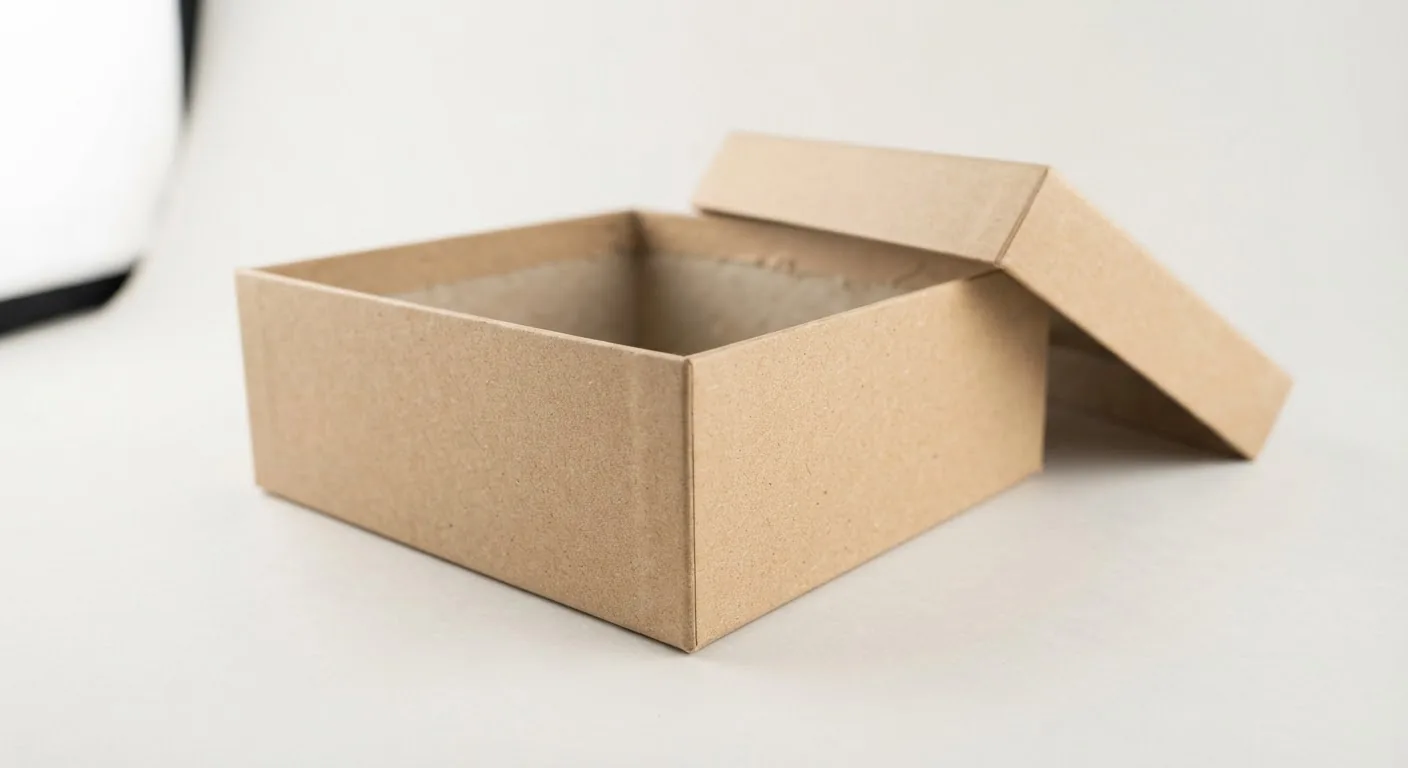
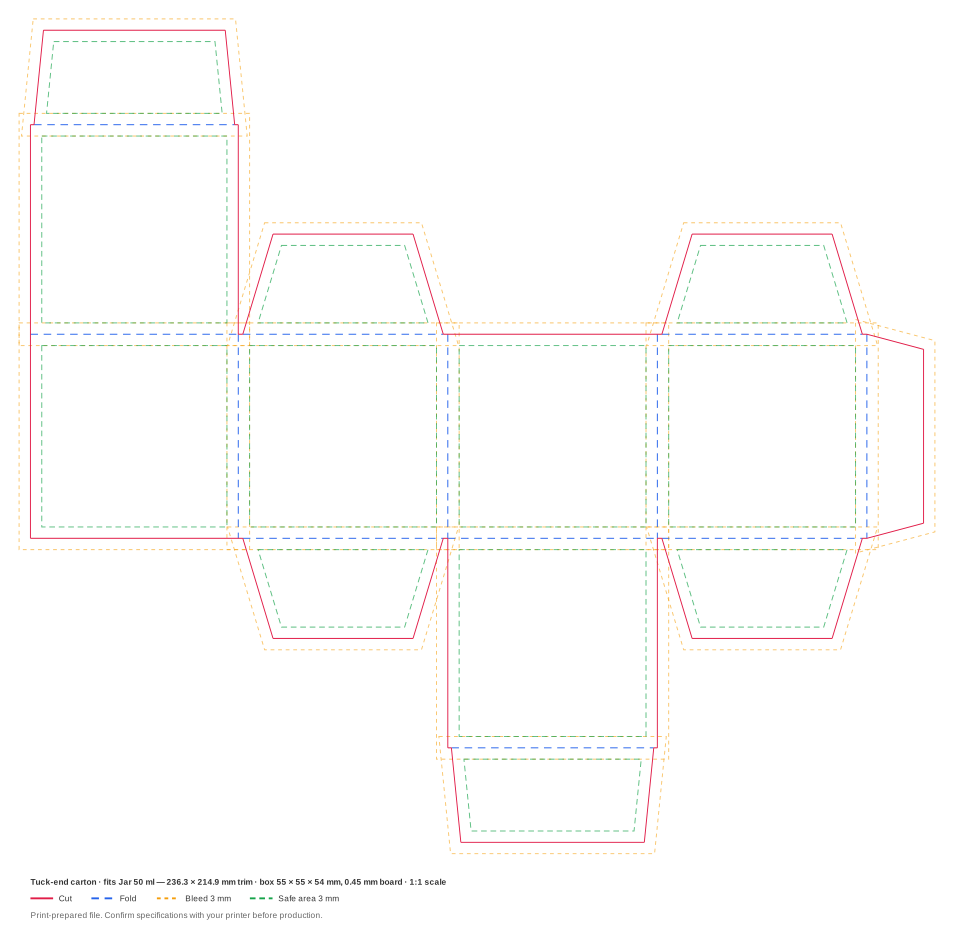
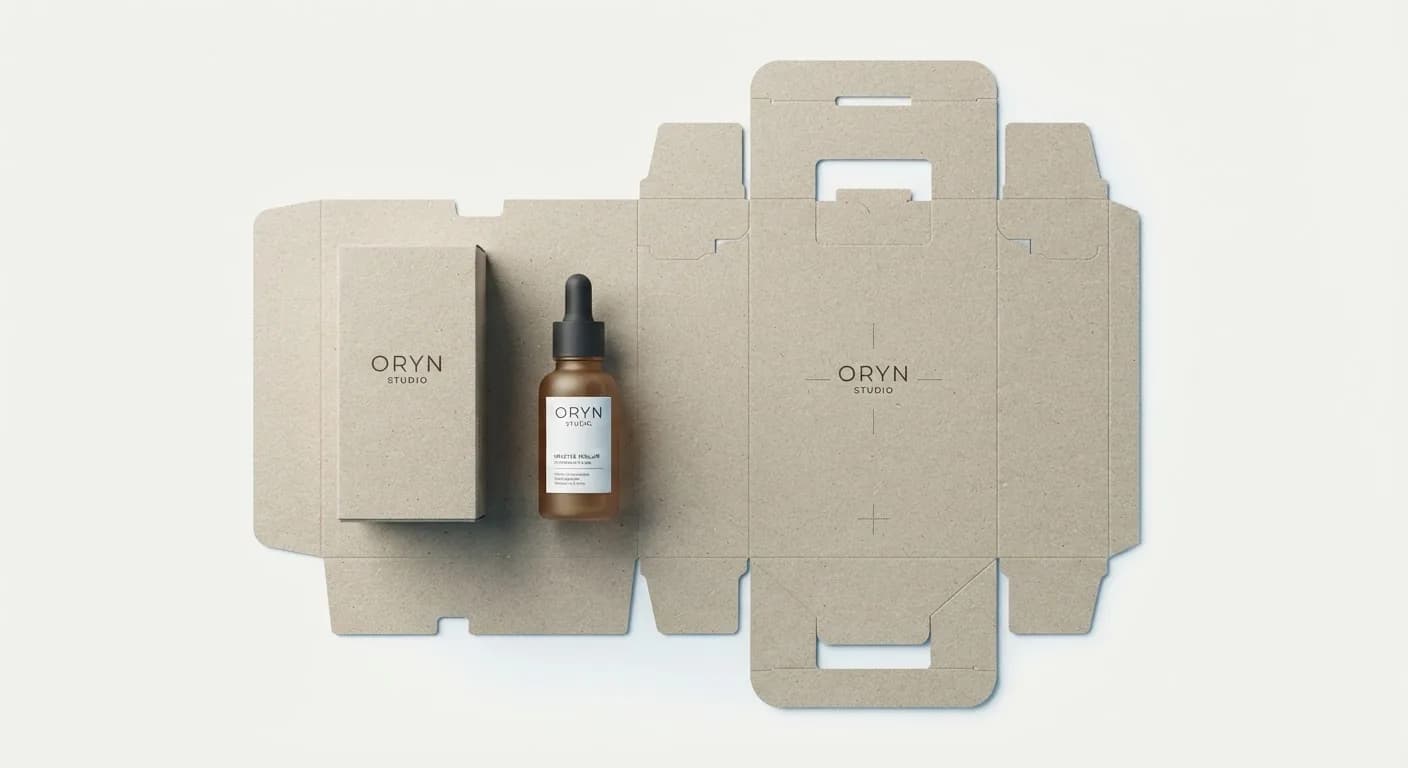
Most skincare boxes are folding cartons, and most of those are reverse tuck end boxes: a single printed sheet, glued once down the side, with tuck flaps closing the top and bottom from opposite sides. What changes from product to product is the size, and the size should come from the container inside, not from a stock box list.
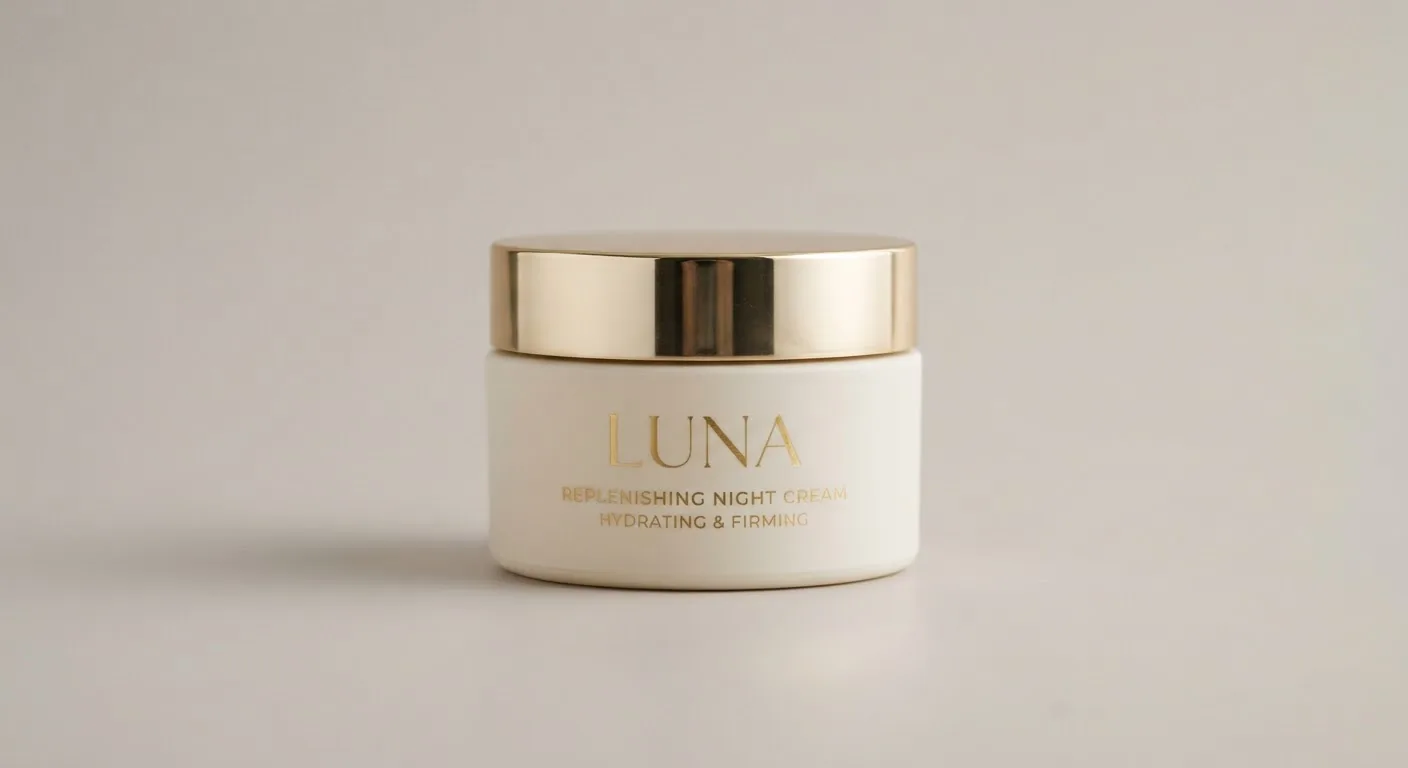
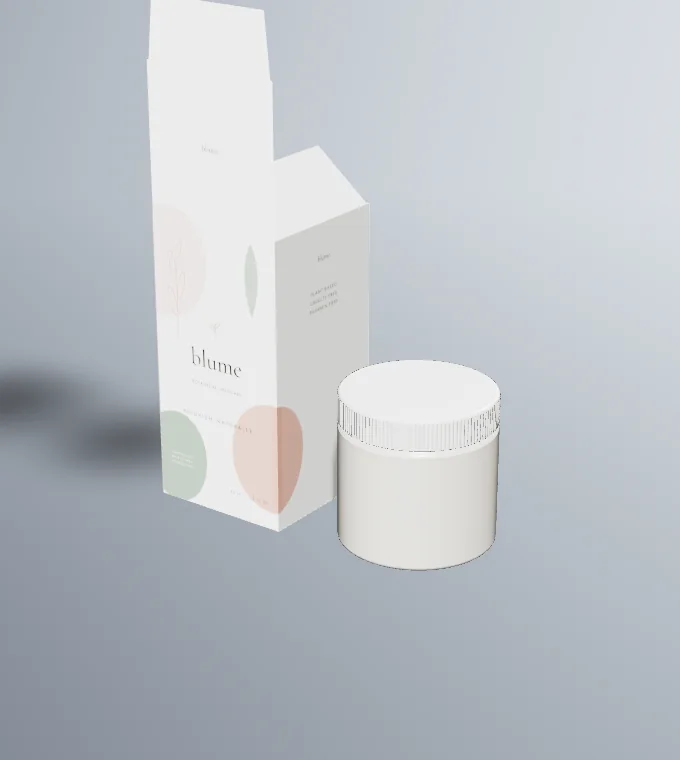
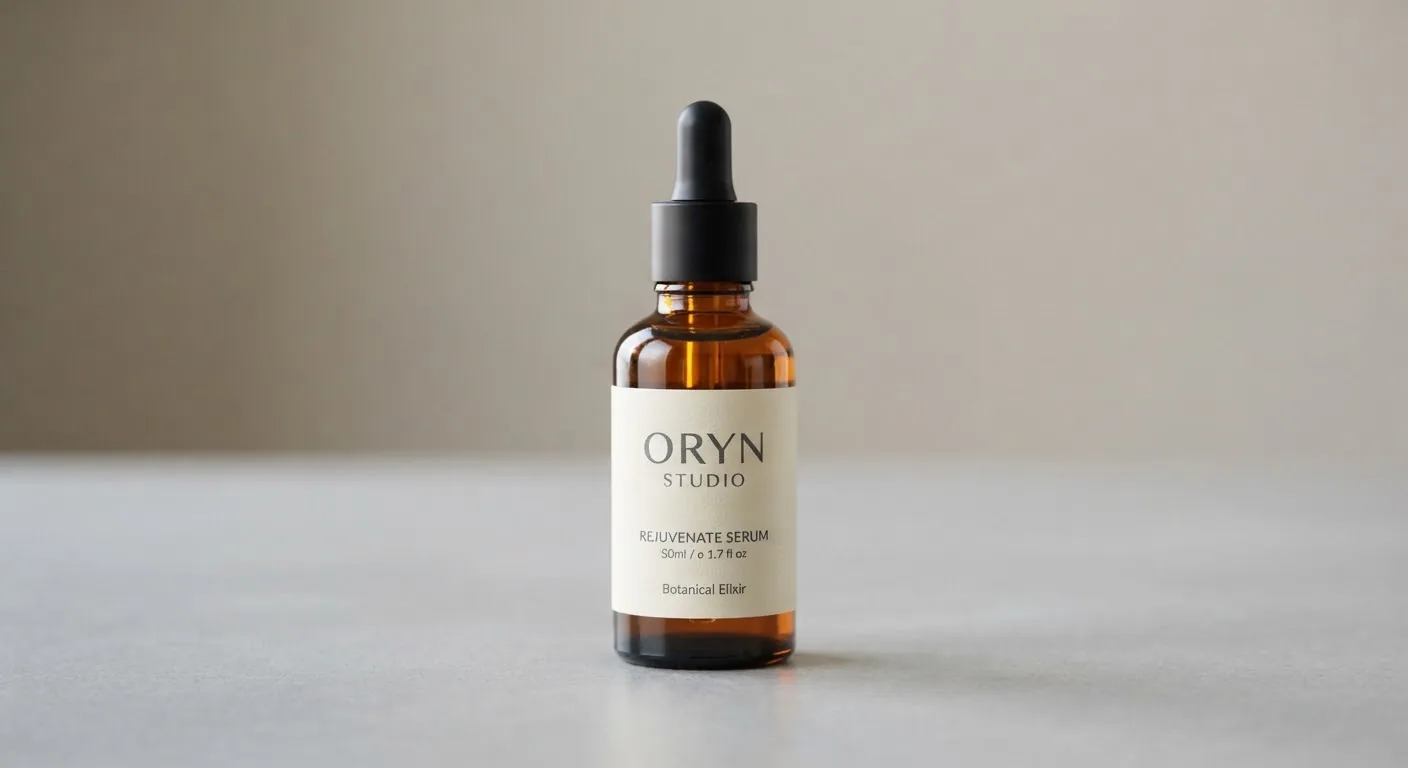
The Packgami engine works the size out from the product. It takes the jar or bottle at its widest, adds 2 mm of air on each side and the board thickness, and leaves 3 mm above the lid, then rounds up to the next half millimetre. With 0.45 mm board our 50 ml reference jar gets a 55 by 55 by 54 mm box, nearly a cube. The sizes table lists the containers this box is built around.
Design tips
- Size from the real product, then test by hand. The 2 mm side allowance stops a jar rattling without making it hard to slide out. Once you have a sample box, drop the real filled jar in and shake it before signing off the size.
- Choose the board first. Board thickness is part of the box size: every panel after the first allows for one board thickness so the loop closes. Changing board after the dieline is drawn means redrawing it.
- Keep artwork inside the safe area. The engine's carton dielines use 3 mm of bleed outside the cut line and a 3 mm safe inset inside it. Keep type and logos inside the safe line so a small cutting shift doesn't trim them.
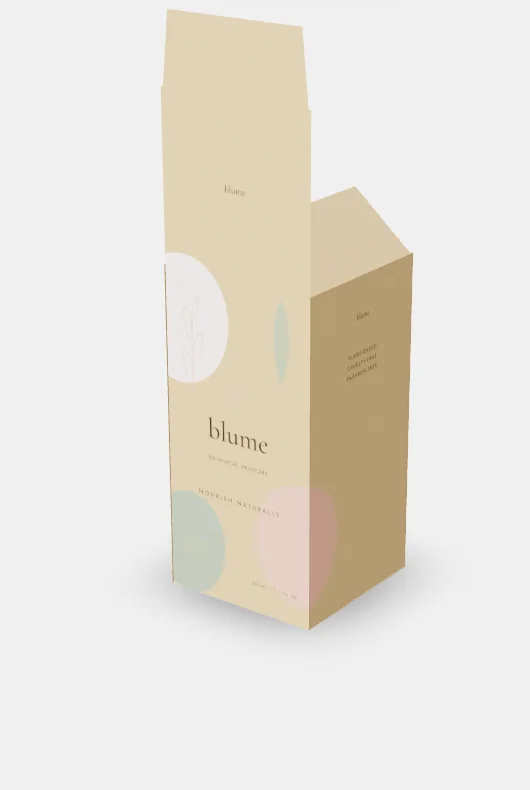
- Plan all six faces. Front for the brand and product name, one side for claims, the other for directions, the back for ingredients, address and barcode. On a near-cube jar box the top panel is as big as the front, so give it the product name too.
- Show that the box hasn't been opened. A small clear or printed seal across one tuck flap tells the customer nobody has been into the box before them, and costs very little.